DOWNLOAD FILE374.0 KB pdf

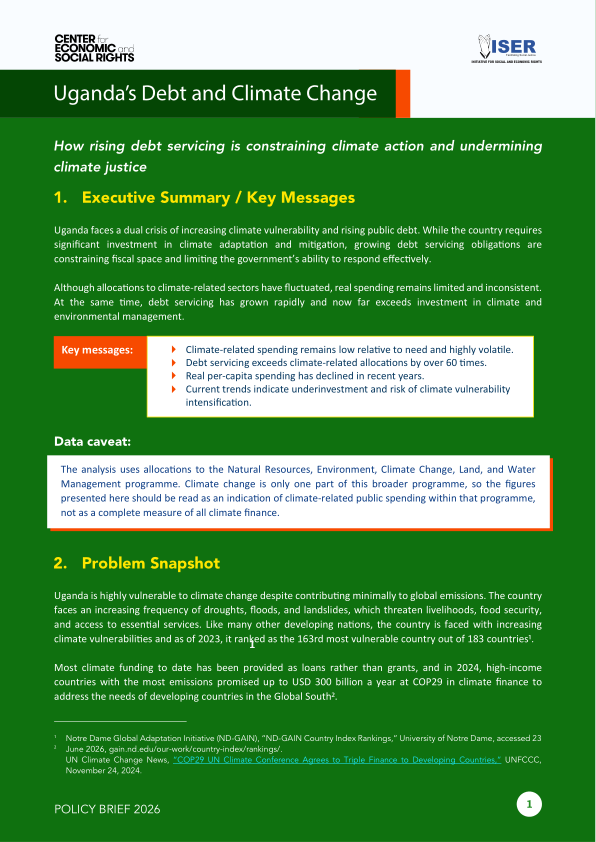
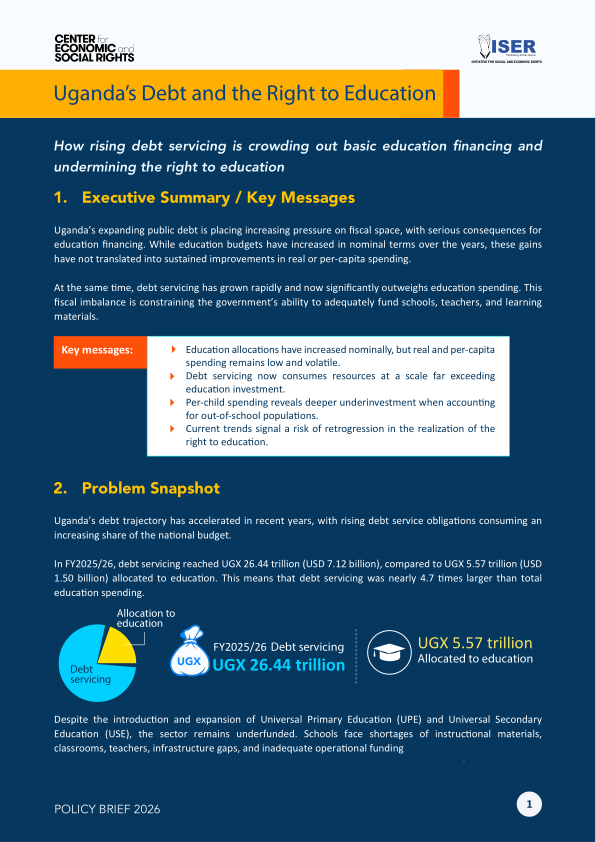
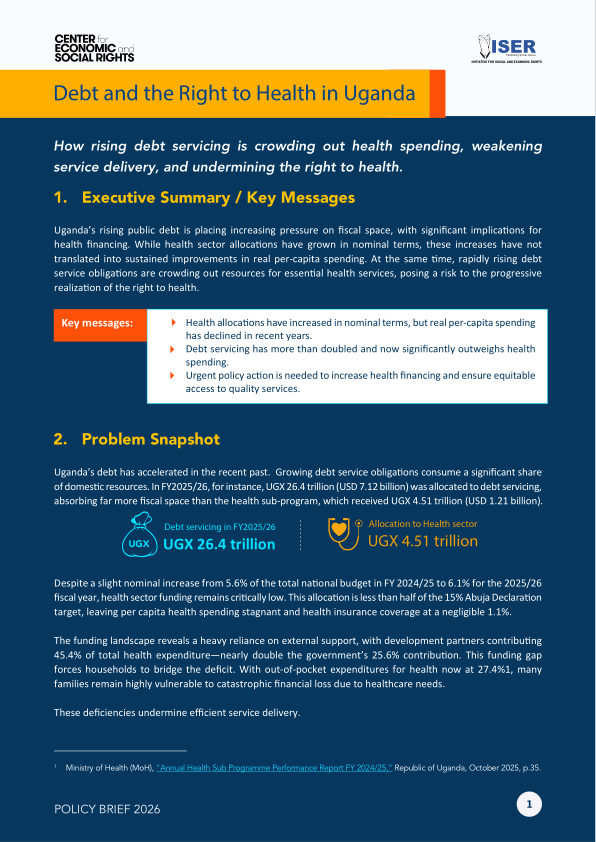
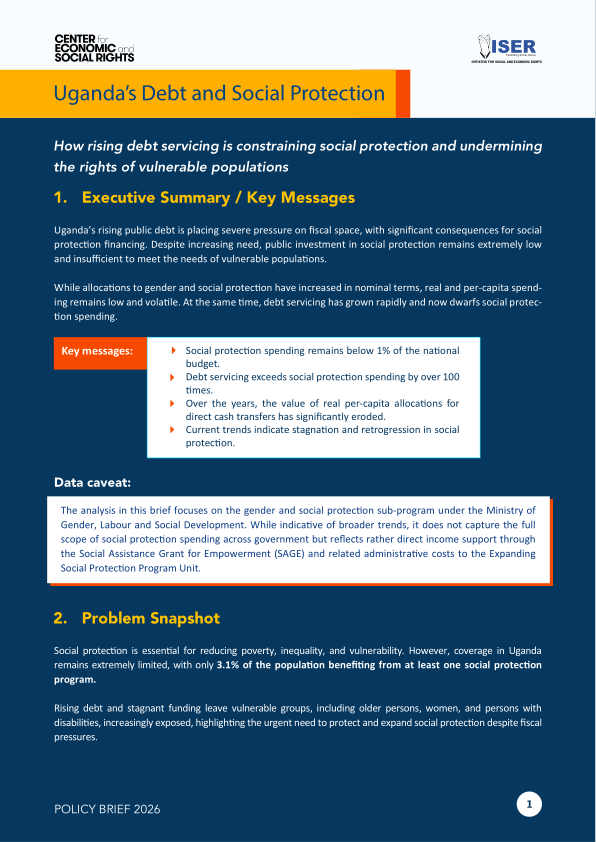
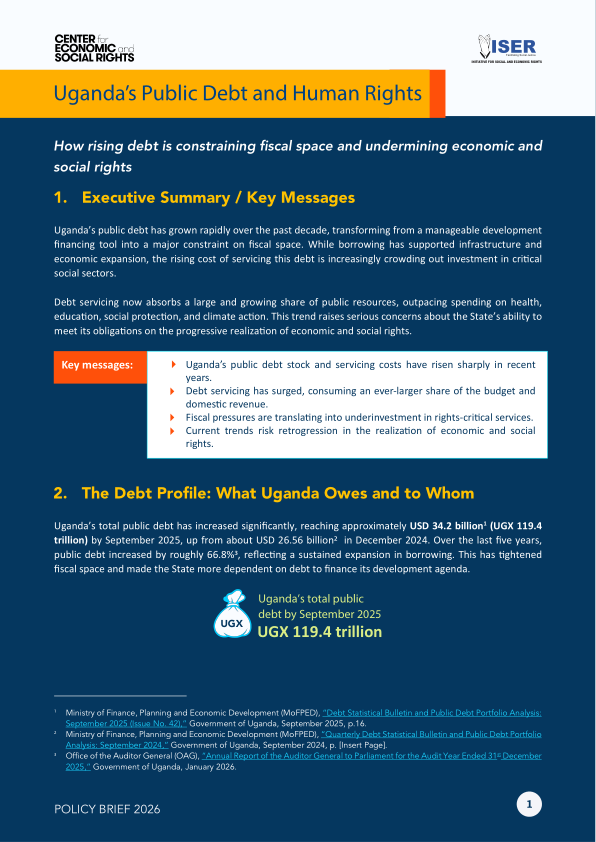
Uganda’s growing public debt is placing increasing pressure on the resources available to fulfil economic and social rights. As the pressure of debt-servicing increases, essential investments in healthcare, education, social protection and climate action are being constrained, with serious consequences for communities already facing poverty, inequality and inadequate access to public services.
A new series of five policy briefs produced by the Initiative for Social and Economic Rights (ISER), with support from CESR, examines the relationship between Uganda’s public debt, government spending and the realization of human rights.
Drawing on budget and debt data, the briefs provide evidence-based analysis of Uganda’s overall debt situation and explore its implications for the rights to health, education and social protection, as well as the country’s capacity to respond to climate change. Together, they demonstrate that public debt is not simply a technical matter of economic management. Decisions about borrowing, debt repayment and public expenditure directly shape whether the government can mobilize and allocate sufficient resources to meet its human rights obligations.
The series also sets out practical recommendations for strengthening public debt governance, protecting social spending and ensuring the fiscal space required for sustainable development.
By placing human rights at the centre of fiscal policymaking, these briefings provide an important resource for government officials, civil society organizations, researchers and others working to ensure that debt management does not come at the expense of essential public services.
Explore and download the five policy briefs below.